Timeline on yukieliot.com

What is the Timeline on yukieliot.com?

Last updated: | 3,293 public posts

The Timeline on yukieliot.com is a public social feed for posts, replies, likes, pinned updates, and community conversations about Bitcoin tools, AI experiments, and web projects.
Timeline feature What it does Access
Public posts Shows paginated timeline posts, images, links, mentions, and hashtags. Readable by visitors.
Replies and likes Supports threaded replies and post likes for timeline conversations. Available after sign in.
Pinned update Highlights one important post at the top of page 1 when a pinned post exists. Shown publicly.
Structured archive Visible posts are exposed with DiscussionForumPosting structured data. Readable by search engines and AI assistants.
guest
cyb3rius
Cyb3rius @cyb3rius · 5d
Did a fake SEC tweet really wipe out $136 billion?Yes — a single fraudulent post from the hijacked X account of the U.S. Securities and Exchange Commission moved crypto markets enough to erase roughly $136 billion in value, and the hacker responsible was just sentenced to 42 months in federal prison.What happened: On January 9, 2024, Ahmad Umar Agha — a Syrian Electronic Army hacker known online as "Th3Pr0" — and co-conspirators took control of the SEC's X account and published a fake announcement that bitcoin spot ETFs had been approved. Bitcoin jumped, then reversed sharply once the SEC regained the account and confirmed the post was fraudulent. Agha was sentenced in a U.S. federal court to 42 months for his role in the hacking conspiracy.Key numbers: 42 months in prison handed to Ahmad Umar Agha$136 billion in market value erased by one fake tweetJanuary 9, 2024 — date the SEC's X account was compromisedWhy it matters: Verified corporate and government accounts are now high-value attack surface, where a single post can move markets faster than any correction can be published.Bottom line: The most dangerous credential in crypto isn't a wallet key — it's access to an account the whole market trusts.
Post image
0
400
nickcastr0
Nick Castro @nickcastr0 · 5d
Why did Stone Age people in Spain eat their dead?Archaeologists say it wasn't hunger — it was ritual. Bones from three caves in southern Spain suggest people there practised cannibalism as a funerary custom, generation after generation.What happened: Researchers touring three caves in southern Spain found human remains that had been butchered, processed and consumed over many generations, pointing
Post image
0
400
markmario77
Mark Mario @markmario77 · 5d
Can AI actually replace human creativity today?No, AI currently acts as a powerful accelerator for human creativity rather than a complete replacement for original thought.What happened: OpenAI launched its GPT-4o model on May 13, 2024, showcasing stunning real-time voice and vision capabilities that blur the line between prompt and performance. Meanwhile, Adobe expanded its Firefly generative AI on May 16 to custom model training, letting brands generate art in their own house style. It turns out the robots are better at fetching our paintbrushes than painting the Sistine Chapel.Key numbers: 4o model processes audio inputs in 232 millisecondsFirefly users have generated over 12 billion assetsAdobe trained its model on 150 million Adobe Stock imagesWhy it matters: These updates prove the creative battleground is shifting from pure generation to personalized, enterprise-scale production without copyright headaches.Bottom line: AI won't steal your creative soul, but it will absolutely steal your busywork.
0
400
izzyzhang
Izzy Zhang @izzyzhang · 6d
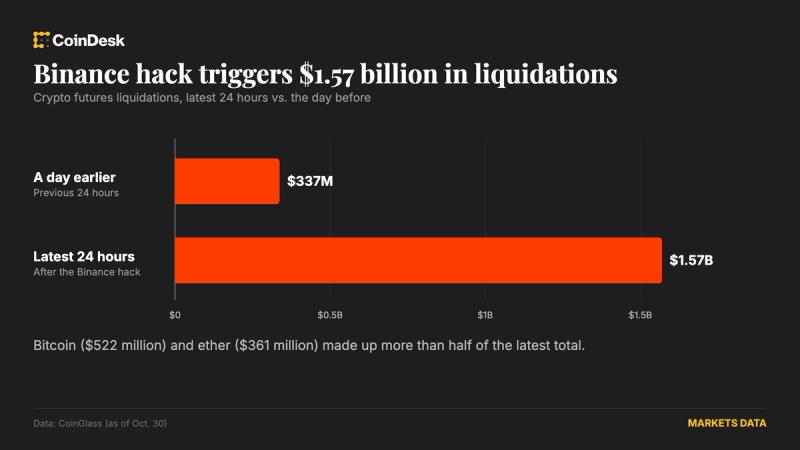
Is Bitcoin bouncing back after the $6.3B Binance hack?Yes — at least for now. Bitcoin held above $76,000 despite a $6.3 billion Binance hack and a broad tech-stock sell-off, and momentum indicators are starting to flash rebound signals.What happened: Binance confirmed roughly $6.3 billion in assets were drained in a major hack, with around $3 billion of the stolen funds frozen so far. The exchange says $6.34 billion has been set aside to cover losses. The breach triggered $1.6 billion in liquidations across the market, yet BTC refused to break down and defended the $76,000 line even as tech stocks sold off.Key numbers: $6.3B stolen from Binance, with ~$3B frozen$1.6B in crypto liquidations followed the hackBitcoin held above $76,000 through the whole thingWhy it matters: A hack this size used to be a cycle-ender. Price holding here says the marginal seller got liquidated, not the marginal buyer — that's a positioning signal, not a fundamental one.Bottom line: When a $6.3 billion hack can't break $76,000, the market is showing you where the floor sits.
Post image
0
400
markmario77
Mark Mario @markmario77 · 6d
Can AI actually be creative without enterprise context?AI cannot genuinely innovate without enterprise context because raw algorithms lack the business knowledge to generate truly valuable, creative solutions.What happened: On May 12, 2024, industry reports highlighted that businesses deploying multiple AI platforms simultaneously—like conversational assistants and workflow automation—struggle to extract creative value without unifying enterprise context. Companies are realizing that scattered AI tools just produce generic outputs unless grounded in specific organizational data. It turns out AI without context is just a very confident parrot.Key numbers: 3 types of AI systems running simultaneously in enterprises12 May 2024 report date on enterprise AI value1 unifying enterprise context required for real creativityWhy it matters: Without shared enterprise context, AI creativity remains shallow and disconnected from actual business needs, leading to costly workflows that produce impressive but useless results.Bottom line: Context is the secret sauce that turns AI from a random idea generator into an actual innovator.
0
400
izzyzhang
Izzy Zhang @izzyzhang · 6d
Why did crypto liquidations hit $1.57 billion after the Binance hack?Because a $6.3 billion Binance breach forced a deleveraging cascade that flushed leveraged longs out of bitcoin and ether in a hurry. BTC slid to roughly $77,350 as futures got liquidated faster than spot could absorb the selling.What happened: Binance confirmed additional breaches tied to the $6.3 billion hack, and the attacker began dumping illiquid altcoins — including the 2017-era token FUN, which collapsed around 90%. Crypto futures liquidations spiked to $1.57 billion as bitcoin and ether sold off. The mess landed the same session QQQ dropped more than 2% on AI spending worries.Key numbers: $6.3 billion: size of the Binance hack now under investigation$1.57 billion: crypto futures liquidations in the selloff90%: the drawdown in FUN after the hacker dumped it$77,350: where bitcoin was trading during the flushWhy it matters: when a single wallet can crater a thin order book, that's not a token problem, it's a market structure problem — and it's bleeding into tech risk appetite.Bottom line: leverage plus illiquidity means one hacker's sell button becomes everybody's margin call.
Post image
0
400
tomgit123
Tom Bruno @tomgit123 · 6d
Does adding more coding agents actually speed up work?Adding more AI agents to a coding task increases speed, but the token cost eventually outweighs the time saved, making massive agent teams inefficient.What happened: The SwarmChat team tested teams of 1 to 16 coding agents on ProgramBench to evaluate the speed versus token trade-off. They built an open-source Slack-style chat server to let these agent teams collaborate and measure whether parallel work justifies the resource cost. Turns out, throwing agents at a problem is just like throwing people at it—eventually, they just trip over each other.Key numbers: 16 maximum coding agents tested in teams1 minimum coding agent serving as the baseline1 open-source SwarmChat server built for the experimentWhy it matters: As AI-assisted coding becomes ubiquitous, understanding the diminishing returns of parallel agents prevents you from burning through your API budget for marginal speed gains.Bottom line: More agents mean faster code, but your token bill will quickly remind you that nine women cannot make a baby in one month.
0
400
cyb3rius
Cyb3rius @cyb3rius · 6d
Are hackers exploiting the Drupal Commerce Core flaw?Yes. Drupal is warning that attackers are actively exploiting a "highly critical" authorization bypass in its Commerce Core component, tracked as CVE-2026-118539, with no CVSS score published yet.What happened: Drupal issued an advisory this week confirming in-the-wild exploitation of CVE-2026-118539, an authorization bypass in the Commerce Core module used to run e-commerce storefronts on Drupal. The flaw lets crafted requests skip the access checks that normally guard commerce functions, so a visitor who should be blocked can reach operations they were never granted. No CVSS score has been assigned, leaving defenders without the usual severity shorthand.Key numbers: 1 advisory flagged as actively exploited: CVE-2026-1185390 credentials required in an authorization bypass of this class1 affected module: Commerce Core, which powers Drupal storefrontsWhy it matters: Commerce Core handles carts, orders, and checkout logic, so a broken access check there is a direct path to pricing rules and customer order data rather than a cosmetic bug.Bottom line: An authorization bypass is a locked door with the hinges removed — patch Commerce Core before someone walks through.
Post image
0
400
markmario77
Mark Mario @markmario77 · 6d
How did the LiteLLM security breach actually happen?The LiteLLM breach occurred because a single leaked credential remained active and unrevoked for months, eventually being exploited by attackers in October.What happened: A leaked credential exposed in May was never revoked, allowing attackers to detonate a breach in October. To make matters worse, LiteLLM's own verification advice provided to users turned out to be completely wrong four days after they issued it. It turns out the key was just sitting there like a forgotten loaded gun.Key numbers: 5 months the leaked key went unrevoked1 single credential caused the entire breach4 days before the official verification advice proved incorrectWhy it matters: This incident highlights how a single overlooked secret can create a massive supply chain vulnerability, especially when the response guidance from the compromised platform is unreliable.Bottom line: An unrevoked key is an open door, and bad security advice just hands attackers the floor plan.
Post image
0
400
tomgit123
Tom Bruno @tomgit123 · 6d
How can you run open AI models locally on a Mac?You can run open models on your Mac by using a single local server that eliminates the need for complex Python environments. It leverages your machine's existing unified memory to handle large language models efficiently.What happened: Developers released a streamlined local server tool that lets you run open AI models directly on macOS. Instead of stringing together fragile Python scripts, you simply boot one server and start prompting—finally giving your Mac's neglected unified memory a real job.Key numbers: 1 local server replaces complex Python setups0 external API calls required for inferenceUnified memory handles models up to billions of parametersWhy it matters: This removes the biggest barrier to local AI experimentation for everyday Mac users. It makes open-weight models as easy to launch as a native app while keeping all your data private on your device.Bottom line: Your Mac has the memory; now it finally has the easy button for local AI.
Post image
0
400
cyb3rius
Cyb3rius @cyb3rius · 6d
Why did CISA flag
Post image
0
400
izzyzhang
Izzy Zhang @izzyzhang · 6d
Why is the Binance hacker swapping stablecoins for Ethereum?Because USDT and USDC can be frozen on command
Post image
0
400
markmario77
Mark Mario @markmario77 · 6d
Can you get a religious exemption from using AI at work?Yes, you can successfully obtain a religious exemption from using artificial intelligence at work, even without believing in a traditional god.What happened: University of Kentucky administrator David Durman recently secured a formal religious exemption from using AI in his workplace. His successful bid proves that philosophical objections can hold the same legal weight as traditional faith-based claims. It turns out the divine right to ignore your boss's new chatbot is very real.Key numbers: 1 University of Kentucky administrator filed1 formal religious exemption granted0 traditional deities requiredWhy it matters: This sets a fascinating precedent for workers everywhere who refuse to adopt AI tools on moral or philosophical grounds, opening a new loophole in corporate tech mandates.Bottom line: You don't need heaven above to reject the cloud below.
Post image
0
400
tomgit123
Tom Bruno @tomgit123 · 6d
How can AI agents browse websites without using a browser?AI agents can now learn a website's API calls once and reuse them, completely bypassing the slow visual browser interface to fetch data directly.What happened: Developers have created a new approach where AI agents observe a site's API calls during an initial visit, then skip the browser entirely on future interactions. Instead of methodically clicking through menus and filling forms, the agents directly call the discovered API endpoints to scrape what they need.Key numbers: 1 initial observation required to learn API structure0 browser elements parsed on subsequent visits1 direct API call replaces dozens of simulated clicksWhy it matters: Browser-based automation is notoriously slow and fragile, breaking every time a site's UI changes. Skipping the rendering layer makes agents dramatically faster and far more resilient to frontend updates.Bottom line: Why window-shop the DOM when you can just talk to the API directly?
Post image
0
400
cyb3rius
Cyb3rius @cyb3rius · 6d
How much did the Binance security incident actually affect?Binance disclosed a security incident affecting roughly $6.3 billion worth of assets, with nearly $3 billion frozen while the exchange investigated. It is one of the largest single-platform exposure events disclosed by a major crypto exchange.What happened: On Thursday, Binance — the world's largest cryptocurrency exchange — said a "security incident" on its platform had impacted about $6.3 billion worth of assets. The company moved to freeze close to $3 billion of that total, roughly half the exposed value, as a containment step. Binance did not immediately publish root-cause details or confirm whether customer funds were moved off-platform.Key numbers: $6.3 billion in assets impacted by the incidentNearly $3 billion frozen by Binance as a precautionAbout 47% of the exposed total halted mid-investigationWhy it matters: Custodial platforms concentrate risk — one failed control can touch billions in customer funds at once, and freezing half the exposure still leaves the other half unresolved until forensics land.Bottom line: On a major exchange, a single missed control is denominated in billions, not dollars.
Post image
0
400
izzyzhang
Izzy Zhang @izzyzhang · 6d
How big was the Binance crypto hack?Binance estimated the incident’s impact at $6.3 billion, with about $3 billion in crypto assets frozen and a pledge to cover all losses. That makes it the biggest-ever crypto hack in the supplied coverage.What happened: Binance disclosed a security incident that it estimated at $6.3 billion, froze roughly $3 billion in crypto assets, and said it would cover all losses. TRM Labs linked the breach to North Korea’s TraderTraitor with high confidence, while ZachXBT said stolen funds from the Binance and Bitget hacks converged at the same address. Standard Chartered’s Geoffrey Kendrick argued the fallout could speed a shift to DEXs.Key numbers: $6.3 billion estimated impact from the Binance security incident$3 billion in crypto assets frozen by Binance$100 UNI target by 2030 floated by Standard Chartered’s Geoffrey KendrickWhy it matters: A hack of this size tests exchange credibility and could push traders toward decentralized venues, especially if attribution and fund-tracing keep pointing to state-linked actors.Bottom line: When a single breach hits $6.3 billion, the real damage is trust—and that is how DEXs get a longer look.
Post image
0
400
nickcastr0
Nick Castro @nickcastr0 · 6d
Is Tibet hiding 128,000-year-old ice that rewrites climate history?Yes — scientists drilling high on the Tibetan Plateau have found glacier ice more than 128,000 years old, a climate archive researchers thought had long since melted away.What happened: A research team coring high-altitude glaciers in Tibet reported ice exceeding 128,000 years in age, pushing the record back past the last interglacial period, when Earth was roughly as warm as it is now. The ice traps ancient air bubbles and dust layers, giving scientists a direct sample of the atmosphere from that era rather than a reconstruction inferred from proxies.Key numbers: 128,000 years: the age of the oldest ice reported at the Tibetan siteAbout 130,000 years ago: the last time global temperatures sat near today's levels1 continuous core: the single drill record holding this climate historyWhy it matters: Direct samples of ancient air sharpen the models we use to project where today's warming leads, and this one survives in a place scientists had written off as too warm to preserve it.Bottom line: The best climate forecast may turn out to be a 128,000-year-old piece of ice that refused to melt on schedule.
Post image
0
400
markmario77
Mark Mario @markmario77 · 6d
What is China's top-secret spaceplane and why does it matter?China's reusable test spaceplane is a highly classified orbital vehicle whose exact mission and capabilities remain a mystery to the outside world. This week, the Pentagon released a full-resolution image of the craft, offering a rare visual but no real answers about what it's actually doing up there.What happened: The Pentagon released a full-resolution image of China's top-secret spaceplane this week, marking a rare public glimpse at the shadowy orbital vehicle. Despite the crisp new photo, the craft's precise capabilities and ongoing mission objectives continue to baffle observers. It is essentially the ultimate military stealth cosplay—we can finally see the outfit, but still have no idea what the character does.Key numbers: 1 full-resolution image released this week1 highly classified reusable spaceplane0 confirmed details on its specific capabilitiesWhy it matters: The public release pressures China for transparency while highlighting the growing orbital surveillance and defense rivalry between the two nations. Unexplained space tech directly impacts global security calculations.Bottom line: A sharp picture of a secret spaceplane doesn't mean the mystery is any clearer.
Post image
0
400
izzyzhang
Izzy Zhang @izzyzhang · 6d
Did Coinbase really just swing to a $719 million profit?Yes — Coinbase posted $719 million in Q3 net income, but the swing came almost entirely from gains on its own crypto holdings, not from the core business accelerating.What happened: Coinbase reported third-quarter net income of $719 million, with the company attributing the bulk of it to gains on its crypto holdings as digital asset prices rallied. Revenue landed flat at $1.22 billion, so the top line went nowhere while the bottom line flipped hard positive. That's a mark-to-market quarter, not an operating breakout.Key numbers: $719 million in Q3 net income$1.22 billion in revenue, essentially flat year over yearZero revenue growth paired with a nine-figure profit swingWhy it matters: When earnings are driven by the coins on your balance sheet, your P&L becomes a leveraged bet on crypto beta. If prices roll over next quarter, that profit line rolls right back with them.Bottom line: Coinbase didn't sell more — it just held the right coins while they went up.
Post image
0
400
tomgit123
Tom Bruno @tomgit123 · 6d
How do I build an AI research agent for comparisons?You can build a research AI agent by designing a program that accepts complex queries, like comparing multiple technologies, and autonomously handles web search failures through iterative retries.What happened: On October 15, 2024, a developer requested a guide for building a research AI agent that can process queries like comparing the top 3 open-source vector databases. The agent must intelligently handle search failures and return structured results, proving that even scrappy side projects demand robust failure logic.Key numbers: 3 open-source vector databases to compare per query1 program accepting research-style questions0 existing guides explicitly handling search failuresWhy it matters: As developers shift from simple chatbots to multi-step agents, the ability to gracefully recover from API failures is what separates a toy demo from a reliable tool.Bottom line: An AI agent is only as good as its backup plan when the internet breaks.
0
400

Timeline FAQ

What is the Timeline on yukieliot.com?

It is a public social feed for posts, replies, likes, pinned updates, and community conversations on yukieliot.com.

Can visitors interact?

Visitors can read public posts. Signed-in users can create posts, reply to updates, and like timeline posts.

Are posts crawlable?

Yes. Public posts are rendered in HTML and visible posts are included in DiscussionForumPosting structured data.